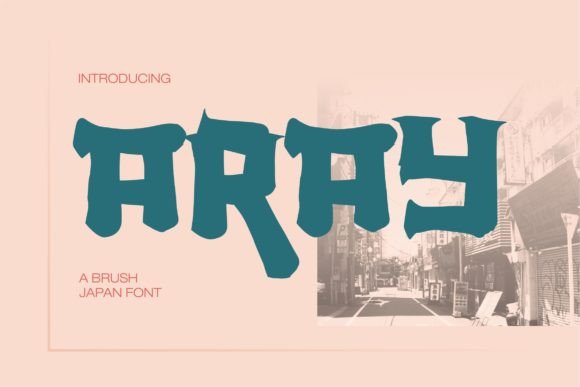
Aray Font: A Japan-Inspired Brush Display Typeface for Makers
There’s a quiet magic in the moment you type “Sakura Soy” into your label mockup—and watch Aray bloom across the screen. Not just as text, but as texture, rhythm, and intention. I was designing candle labels for a spring collection—hand-poured, minimalist, botanical—and needed something that felt both grounded and poetic. That’s when I opened Aray, a Japan-inspired brush display font, and instantly knew it wasn’t just another decorative choice. It was the voice my packaging had been waiting for.
Aray for Candle Labels and Handmade Product Packaging
Aray shines brightest where attention lingers: on jar labels, box stamps, and boutique tags. Its brushstroke energy—slight tapering, organic flow, subtle ink variation—mirrors the care behind handmade goods. Because Aray is a display font, it’s built for impact at medium to large sizes: think 18–48 pt on 3″ x 2″ candle labels or 60+ pt on kraft paper gift boxes. It reads cleanly when printed, holds up beautifully on matte sticker vinyl, and cuts crisply in Cricut Design Space (just convert to outlines first). For best results, pair Aray with a warm, airy sans serif like Montserrat or Poppins for ingredients, burn instructions, or shop names—letting the Aray handle the soul, and the sans handle the clarity.
Aray for Wedding Invitations and Elegant Branding
When designing wedding welcome boards and envelope addressing for a friend’s Kyoto-inspired garden ceremony, I reached for Aray without hesitation. Its delicate yet confident strokes evoke Japanese calligraphy—but without rigid formality. It feels intentional, not ornamental. As a display font, Aray works powerfully for names, dates, and titles (“Yuki & Ren • June 2025”), but avoid long paragraphs—it’s not meant for body copy. Instead, use it for monograms, floral accents, or single-line headers above clean serif text. Bonus: many fonts in this style include alternate glyphs and ligatures; check if your Aray download includes swashes or contextual alternates—they add subtle sophistication to digital printables or laser-cut wood signs.
Aray for Printable Wall Art and Planner Pages
I tested Aray across three planner page styles: a seasonal gratitude tracker, a minimalist weekly spread header, and a framed 8×10 printable titled “Breathe In Stillness.” Every time, the Aray typeface added warmth without clutter. Because it’s a brush display font, its slight irregularity makes digital printables feel hand-touched—even when printed from home. For wall art, scale it generously and leave generous margins: the expressive stroke contrast reads beautifully at 200+ pt. Just remember—Aray is designed for display, not dense layout. Use it for titles, quotes, or focal words only. Pair with a light, legible sans (like Lato Light) for subtitles or captions. And always preview your PDF at 100% zoom before sending to print—it reveals how the ink weight settles on paper.
Aray for Stickers, Tote Bags, and Boutique Tags
Sticker sheets are where Aray truly surprises. On 1.5″ round die-cut stickers—“Matcha Moments,” “Slow Sunday,” “Pressed Petals”—the font’s brush energy translates into charm and cohesion. Same goes for cotton tote bags: heat-pressed or screen-printed, Aray holds its character without bleeding or pixelating. As a display font, it thrives in short bursts of meaning—not slogans, but signatures. For physical production, confirm your Aray license covers commercial use (most premium fonts do, but always double-check file permissions before selling SVGs or POD items). Also note: avoid using Aray below 14 pt on small product tags—it loses stroke definition. When in doubt, test print a 12 pt sample on your actual label stock.
Aray for Seasonal Craft Designs and Digital Downloads
Last December, I updated my holiday printable bundle—ornament tags, gift box toppers, and a “Joyful Gatherings” digital menu card. Swapping out my usual script font for Aray changed everything. The subtle asymmetry, the soft entry/exit of each stroke—it whispered “handmade,” not “designed.” Because Aray is Japan-inspired, it brings quiet elegance to winter themes without leaning into cliché. For digital downloads, embed Aray as outlined text in PDFs or include OTF/TTF files for Canva users (with clear usage notes). And yes—it pairs gorgeously with minimalist line art, watercolor textures, and neutral palettes. Just keep spacing open: Aray needs breathing room to sing.
Aray for Greeting Cards and Hand-Lettered Shop Signage
My favorite real-world test? Hand-lettering a small chalkboard sign for my craft fair booth—“Freshly Pressed • Small Batch • Made With Care.” I sketched it freehand first, then recreated it digitally using Aray. The result felt authentically human—because the font itself honors gesture and motion. As a display font, Aray excels on greeting cards where one phrase carries emotional weight: “You Are Enough,” “Welcome Home,” “Celebrate Quietly.” Use it solo, centered, with ample negative space. Avoid stacking multiple weights—Aray typically ships as a single expressive weight (check your download), so lean into its natural rhythm instead of forcing contrast. And for physical signage—wood, acrylic, or vinyl—export as vector outlines to preserve every brush nuance.
Before You Download Aray Fonts: Quick Practical Notes
- Confirm licensing covers your use case: physical products, digital templates, merch, or social graphics.
- Check file formats included—OTF is ideal for design apps; TTF works well for cutting machines.
- Look for stylistic alternates or swashes—they’re often hidden in glyph panels (Glyphs app or Font Book).
- Test readability at your smallest intended size—especially for stickers, tags, or tiny packaging.
- Pair intentionally: Aray sings alongside clean sans serifs, gentle serifs, or even restrained scripts—but never competing bold displays.
At its heart, Aray isn’t just another pretty display font. It’s a quiet collaborator—elegant without pretense, expressive without excess. Whether you’re pressing wax, printing invitations, cutting vinyl, or building a brand that feels deeply human, Aray meets your work with presence and grace. Add it confidently. Then step back—and be astounded by what it helps you make.